

Farmland Lease Termination Notices Explained
Like most businesses, farming and land ownership is a balance of analyzing past decisions while looking ahead and planning for the future. With the 2026 crop year well underway across the corn belt, many farmers and landowners are already thinking about what they’ll do differently in 2027. As operating plans are adjusted and projects are planned, it’s important to also begin thinking about next year’s farm lease and any changes that may need to be incorporated.
A well-drafted farm lease can be the difference between a great working relationship with your farm operator or an opportunity for headaches and confusion. A farm lease should include the number of acres, intended use of acres, the rental rate of said acres, term of the lease, owner and operator, legal description, and any additional provisions such as special requirements of the farm operator, fertilizer depreciation schedules, reservation of hunting rights, and so on. This document should precisely outline the expectations and responsibilities of each party and be signed by everyone involved. Verbal leases are also binding but much harder to enforce. Landowners and operators should try to get leases in writing whenever possible.
While written leases are great, they often need to be changed with time. When these changes need to be made, the easiest way to proceed is by terminating the current lease and drafting a new one to accommodate the new provisions. The idea of a formal lease termination is relatively straightforward, but it is important for landowners and farm operators to understand the laws in their state to ensure this process is done properly to avoid any legal liability. Termination requirements differ from state to state and vary depending on the type of lease, such as year-to-year, verbal or written, and crops grown on the property. If individuals are unsure of the termination requirements in their state, Land Grant Universities can be a great resource regarding farm leasing laws.
A farm lease can be terminated by either party (owner or operator) but must be terminated properly to be legally binding. Otherwise, the only way to terminate a lease without following the procedures set forth by each state is to mutually terminate the lease and have the termination notice signed by all parties, which they can refuse to sign if they choose. Farm leases that are not terminated by the deadline or do not state they are null and void after the expiration of the initial term will automatically renew on a year-to-year basis until properly terminated.
The interactive map below highlights the termination requirement for each state that formal termination must be delivered prior to the expiration of the current farm lease for the following crop year. i.e., for Illinois, if the lease expires February 28, 2027, termination notice must be delivered on or before October 28, 2026 in order to terminate the 2027 farm lease. Delivery method varies by State. (Click image for larger view)
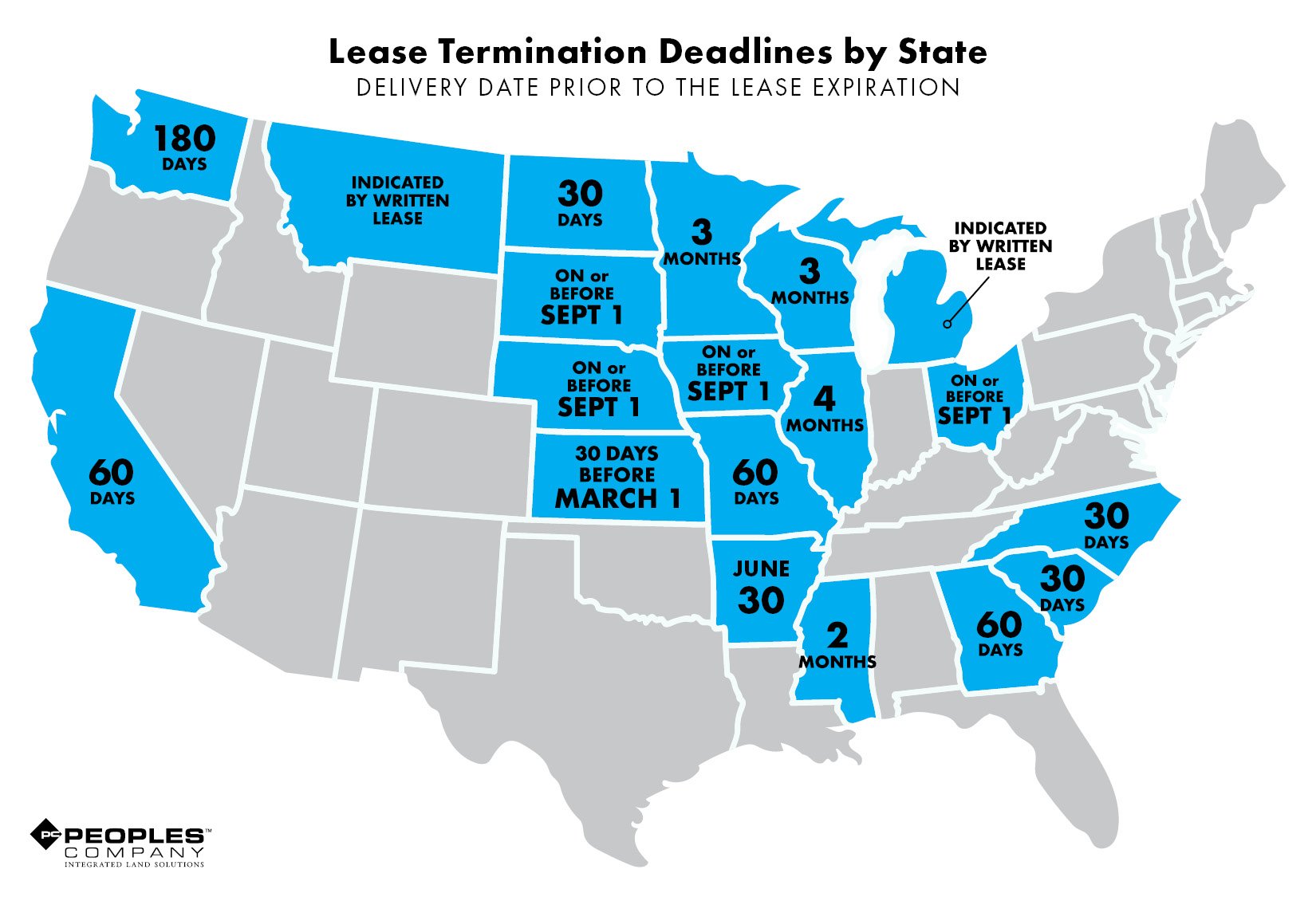
The summer months are a perfect opportunity for landowners and operators to touch base and begin planning for the following crop year and negotiate a new lease to accommodate any changes. Also, landowners who are entertaining the idea of selling their farm in the next 12 months should also consider terminating their current farm lease to leave the property open for potential buyers. While the map above highlights the timeline in which the notice must be given prior to the expiration of the current lease, landowners and operators terminating leases should fully understand the terms and provisions of the current lease and are encouraged to conduct their own research regarding the termination requirements specific to their state. Many states require termination notices to be delivered either in person or via certified mail, be in writing, and an owner/operator signature to be binding. No one likes surprises, so the earlier the conversations start with your farm operator, the better off everyone will be, especially in states where winter wheat and over-winter crops are grown.
If you are interested in terminating a lease and don’t know where to begin, Peoples Company’s land managers are well-versed in the termination requirements for many of the large agricultural states and have successfully terminated hundreds of leases over the years. Peoples Company’s team of land managers handles all aspects of farmland leasing, management, and ensuring conservation and appreciation of your agricultural asset. Reach out if you are interested in the benefits of professional land management.
STATE-BY-STATE RESOURCES
Arkansas
California
Georgia
Illinois
Iowa
Kansas
Michigan
Minnesota
Mississippi
Missouri
Montana
Nebraska
North Carolina
North Dakota
Ohio
South Carolina
South Dakota
Washington
Wisconsin
Agriculture
Crop Insurance
Energy Management
Industry Insights
Land Auctions
Land Investment Expo
Land Management
Land Values
News & Events
Real Estate


Peoples Company proactively works to anticipate the needs of those in the agricultural sector. Our monthly email publication keeps readers in the know about everything land.
